

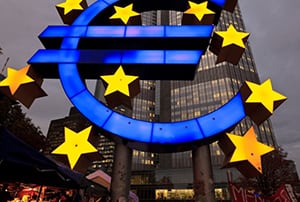
Official interest charges in Britain and Europe remain the same after meetings of rate setters decided no changes were required.
The Bank of England monetary policy committee voted to peg the official bank rate at 0.5%.
The position has remained unchanged since March 2009.
The governing council of the European Central Bank also met this week to set rates for the Eurozone.
Again, rates remained pegged at 0.05% for the main rate, 0.03% for marginal lending and -0.20% for cash savings on deposit.
Elsewhere, the Bank of Japan accelerated the country’s quantitative easing program to speed up the rate of recovery and economic growth.
Brakes on rates
The Russian rouble was floated against the US dollar to ease stress on inflation and the economy from sanctions and falling oil prices.
While in Brazil, the central bank also raised interest rates unexpectedly to 11.50% in an effort to put brakes on rising inflation.
Commentators suggest that this might not be enough to rein in rising prices and that further rate rises are on the way in the New Year.
Generally, the Bank of England and US Federal Reserve are expected to keep the brakes on interest rate rises well into 2015.
The UK has a general election in May, and no movement is expected before then.
Messages out of Washington suggest the Fed may not raise rates until 2016.
Policy divergence
Generally, the central banks tasked with policing inflation and interest rates are keeping their heads down as recent comments about hikes spooked markets around the world.
No one seems willing to commit to any comment about timescales for increasing interest rates for fear that they may spark another round of tumbling stock markets.
One fund manager, Scott Thiel of BlackRock, said: “Market volatility is returning and we see more disruption on the way due to a time of very loose monetary policy while the gap between some policymakers is beginning to widen on the correct stance to take to manage their economies.”
He was referring to the UK and USA policy of quantitative easing to stimulate growth, now taken on by Japan, while European finance ministers have repeatedly refused to take action to protect the Eurozone.
The result is a strengthening US dollar and British Pound, while QE is weakening the Yen and the euro is falling against most major currencies.